
Frequently asked questions.
Q. What is We Stand Together?
A. We Stand Together is a grassroots initiative that supports county-level Democratic committees—especially in swing states—by pairing them with volunteer fundraising and organizing teams from around the country. The aim is to strengthen the Democratic Party’s local infrastructure through long-term, relational support.
Q. Why does We Stand Together focus on county Democratic committees?
A. Because county committees form the backbone of the Democratic Party’s grassroots infrastructure: unpaid volunteers who canvass, recruit, and support down-ballot candidates, host public events, and sustain local community organizing. These local committees often operate with very limited resources—receiving minimal, if any, funding from national or state-level Democratic organizations—yet they play a crucial role in organizing and civic engagement. We Stand Together aims to provide them with financial and relational support so they can sustain and strengthen their work.
Q. What exactly does We Stand Together do to support those committees?
A. The organization pairs each underfunded county Democratic committee with a small team of volunteer fundraisers and organizers from another state (often a blue state). These teams meet—generally via Zoom—with their partner committee to build relationships, understand the committee’s needs, and provide support. This approach is described as “direct relational organizing,” which aims to offer a more meaningful and connected mode of political engagement than other forms such as phone-banking, postcard campaigns, or anonymous donations.
Q. Who can take action through We Stand Together—and how?
A. Individuals who want to help build grassroots Democratic infrastructure can join an existing fundraising/organizing team or help form a new one. This gives people in more politically stable (blue) areas a meaningful way to contribute to under-resourced county Democratic committees in key swing regions.
Q. Where does We Stand Together operate?
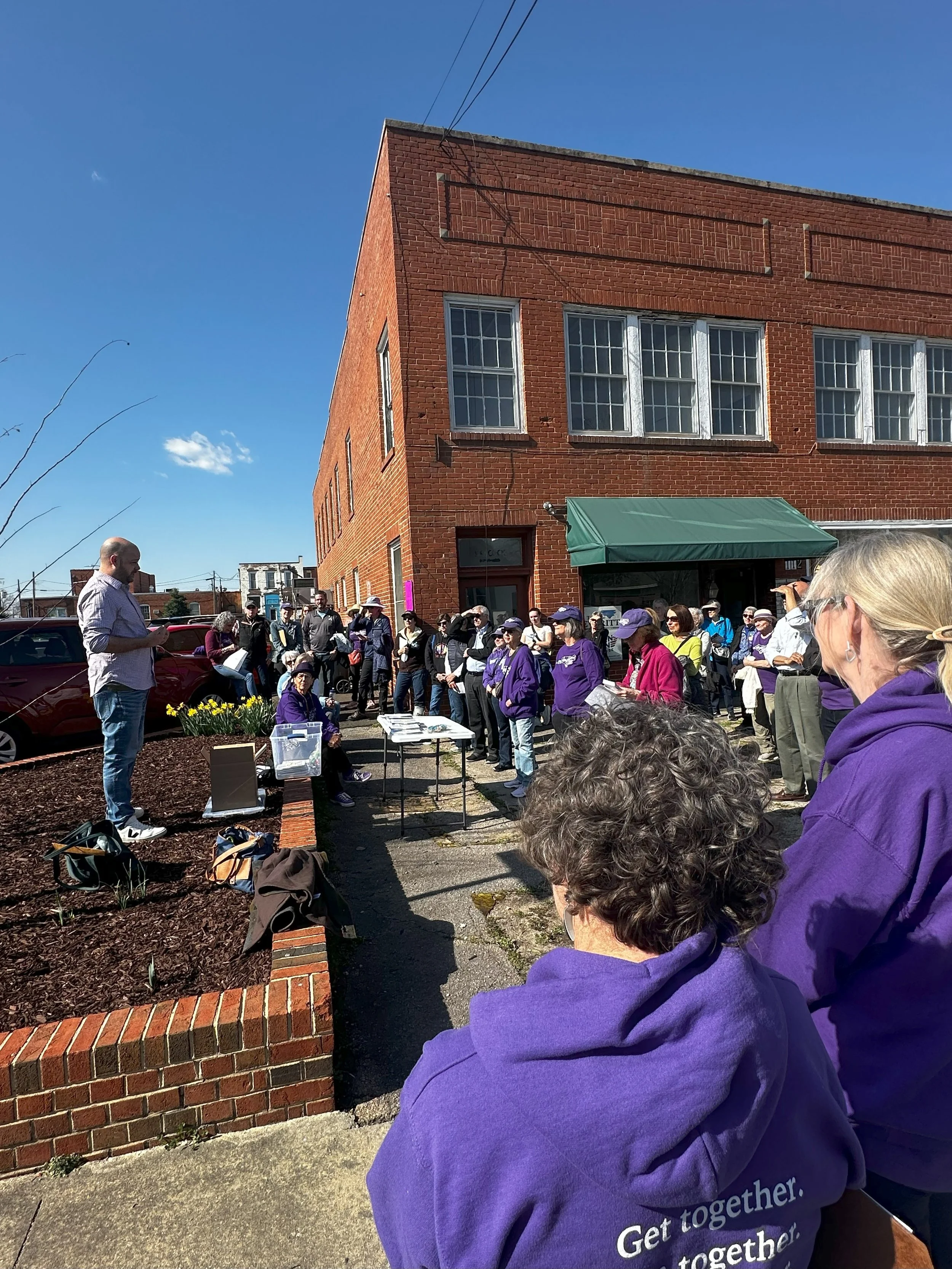
A. We are volunteers across the U.S., partnering with county Democratic committees, including the Beaver County Dems in Pennsylvania, and the Granville, Nash, and Cabarrus County Dems in North Carolina.
Q. Why was this organization created—what problem does it address?
A. We Stand Together was created to fill a critical gap in the Democratic-party infrastructure: many county-level Democratic committees operate almost entirely on volunteer effort with little financial support. Without resources, these committees struggle to recruit candidates, organize events, build volunteer capacity, or maintain consistent outreach. We Stand Together’s mission is to strengthen these grassroots foundations by offering funding and relational support—helping ensure that local organizing is sustainable and effective.
Q. How is We Stand Together different from donating to a candidate or to a national political organization?
A. Instead of funding a particular candidate or contributing broadly to a national organization, We Stand Together emphasizes long-term, structural investment in local political infrastructure. Through “relational organizing” and sustained support for county committees, the goal is to build durable grassroots capacity, not just support a single election or campaign. This approach fosters community-level relationships, civic engagement, and local political strength that persists beyond any given election cycle.
Q. How does the partnership model work?
Each county committee is matched with a small team of volunteer fundraisers/organizers (usually from blue states). The team meets regularly with the committee, builds relationships, learns its specific needs, and raises money directly for that committee’s work. It’s a sustained, person-to-person partnership.
Q. What is “relational organizing” in this context?
Relational organizing here means building direct, ongoing relationships between committee leaders and the volunteer teams supporting them. Instead of one-off actions (like donating once or sending postcards), volunteers become long-term partners who understand the community, the challenges, and the strategy.
Q. Why is building local infrastructure so important?
Local committees:
Recruit candidates
Do sustained voter outreach
Keep volunteers engaged between elections
Build community trust
Serve as the first line of defense against disinformation
Without stable funding and support, these core functions suffer—and Democrats lose ground over time.
Q. How much time do volunteers need to commit?
Most volunteer teams meet monthly with their partner committee. Fundraising efforts vary, but many teams spend a few hours each month organizing appeals, hosting small events, or coordinating outreach.
Q. Do volunteers need prior fundraising or political experience?
No. Many volunteers are new to political organizing. The model is designed so anyone—with or without experience—can meaningfully support local Democratic volunteers doing essential work.
Q. What are some examples of funded activities?
We anticipate that donations raised by volunteer teams will support:
Printing and canvassing materials
Local event hosting
Volunteer recruitment programs
Candidate support
Precinct organizing
Community education efforts
Q. What’s the long-term vision of We Stand Together?
To build a durable, horizontal network of local Democratic committees nationwide—one that strengthens grassroots leadership, grows volunteer capacity, and shifts power back toward everyday Democrats rather than national donors and consultants. The goal is not only to win elections in 2026 and beyond, but to rebuild the Party’s foundational infrastructure for the long haul.
Q. I’m interested—how do I get involved?
A. You can join an existing fundraising/organizing team or help form a new one. The “Take Action” section on the website guides interested individuals through the process. In addition, subscribing to their email list lets you receive news and updates about opportunities to participate.